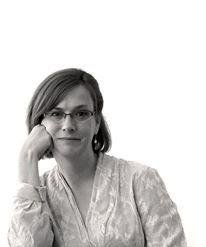
In Bondage

I’m in bondage this morning to two overflowing hampers of dirty laundry.  A shortage of clean undergarments has become a near-crisis. Guests over the weekend disrupted the laundry-doing cycle and contributed three extra sets of sheets and towels to the normal weekly wash. The washing machine will be busy most of this morning. The nice thing about doing laundry is I can do my sermon-writing around it. Breaks to fold and to spray-and-wash stains gives my eyes a break from the computer screen and my brain a break to re-group and think through transitions.

Later today I’m meeting a church member to wash and sort toys in the church nursery. We’re moving the nursery from a great-big room at the end of a long hallway to a smaller, more infant and toddler friendly sized room closer to where most of the Sunday morning action is. Last week when we met we culled the collection of toys and pulled out at least five large garbage bags full of things to donate and another two or three to throw in the trash.

These are the days when I lament. We’re drowning in So.Much.Stuff. The Pixar movie Wall-e haunts me. Poor little Wall-e the trash compactor robot left to roam the earth after humans have fled to cruise-ship like spaceships, trying to compact all the trash piled all over it—I feel his pain especially on days like today.

I know why the church nursery has so many, many toys. People donate their children’s and grand-children’s gently-used toys and over time they just accumulate.

I know why I have all these sets of sheets and towels and extra beds. Mike and I have six adult children between us. We want them to feel free to come home to visit and to bring friends with them when they are able. I have all this laundry to do because we aim to be hospitable–but still, the mounds on my laundry room floor and the bags of toys for the Salvation Army store and the garbage bin remind me of a story from years ago.

I was twenty-six years old and just setting up house in Zaire. The two of us (my ex-husband and I) had been assigned a four bedroom home built by and for Disciple missionary families in the forties or fifties. The house had a lot of windows and I can sew, so an afternoon visit to the merchants in Mbandaka ten miles away provided me with ten dress-lengths of fabric from which to make curtains. The next morning the fabric was piled on a chair in our living room when Bontongu, one of our students at the Pastor’s Training Institute, came to help us out around the house. His eyes widened when he saw the stack of fabric. I told him I was going to make curtains from it and he nodded, still wide-eyed. He said, “My wife has one dress length of fabric from which she made her dress. It is the only one she has since she was full-grown.”

Later that same week Bontongu saw a couple broken drinking glasses in our kitchen trash. He asked if he could have them. “They’re broken.” I said. He nodded. “They’re sharp. You’ll be cut on them.” I said. He said, “I will use a stone to rub the sharp edges until they are smooth and we will be the only family in the school with our own drinking glasses.”

When I get to feeling that I’m in bondage to too much stuff I think of Bontongu who had next to nothing in material possessions and I remind myself that mine is a bondage of my own choosing. Nobody has ever forced me to buy anything. If I want to do something about having too much stuff, the good news is, I can.

Benediction

I witnessed something breathtakingly beautiful yesterday.

It was ten minutes before worship. I was in the sanctuary greeting people and making sure everything was in place. I’m going to say the man’s name is Stan. I’m guessing he’s in his late seventies. In his prime he was a stellar athlete, an outstanding baseball player. Now it takes him twenty minutes just to walk from the sidewalk outside our building into the sanctuary and find his seat in the pew. When Stan walks, the man who used to soar around the bases is curled into the shape of the letter “C.” Lingering back injuries and Parkinson’s disease have ravaged his body. As Stan and I were chatting, little children were running around in the aisles.

I’ll say her name is Kaya. She’s just turned two years old and is as cute as any two year old child to whom God has ever given the gift of life. I mean, she’s make-your-innards-ache cute. Yesterday her red gingham dress was simply icing on the cuteness-cake. From the opposite end of our very long pews she spied me and squealed my name, “Dr. Becky!” Making a bee-line for me I reached my hand in front of Stan to receive Kaya’s spirited high-five. What joy!

Not one to stay in one place very long, Kaya turned and headed back to the other end of the pew. I said, “Kaya, wait.” She stopped and looked at me quizzically. “How about giving Mr. Stan a high-five, too?” She nodded her perfect little head, grinned her perfect little smile and came back. Looking directly up into Stan’s face, Kaya gave him “five” but it was a different gift than that which she bestowed on me. She was more gentle in her approach and then, just as she was about to pull her hand away quickly the way one does when “giving-five,” Kaya paused and simply rested her perfect little hand on top of Stan’s age-ravaged hand and looked him, kindly, in the eye before turning and running to the other end of the pew.

Did I mention, Kaya’s just turned two? It’s only been a month or two since she clung tightly to her mama or tata and peeked shyly from behind their legs.

A crippled-up, proud and kind old man, received his benediction, his blessing on his day, as a free gift from an impossibly beautiful cherub, just before formal worship began.

And God was in that place. And God was in that moment. And tears were in our eyes. And a little child led us.

I love the church.

I Haven’t been bored

Daniel, my middle son, was about eighteen months old when I walked into our kitchen and found him perched on top of the refrigerator. When he was six, I walked into the dining room and found him just hanging out at the top of the open door frame. He’d shimmied up with his bare feet and was perched there like some blonde-headed birdie. When he was fifteen, I opened the door from the kitchen into our garage to take out the recycling and was surprised to find the garage door up and one of Dan’s friends standing facing me in the driveway with his video camera aimed slightly up.

I dropped the recycling in the bin and nonchalantly sauntered toward Dan’s buddy. We nodded at each other and slowly I turned to see what he was filming. Perched on the edge of the garage roof was Daniel in his bright yellow bike helmet wearing knee pads on his bare legs, poised…with his pogo stick ready to jump.

“Hi Mom.”

“Whatcha doin’, Daniel?”

“This is going to be epic! It will make a really great video for YouTube.”

“Wrong. Dan. It’s not happening.”

“But, Mom!”

“Nope. You’re going to take your pogo stick and drop it onto the front lawn over there and climb down the ladder and put the ladder away.”

“Come on, Mom. I’ve got my helmet.”

“No Dan. You have my permission to jump off anything you want on your pogo stick when you’re a full grown man, paying your own medical insurance and your own homeowner’s insurance, but right now everything’s on my ticket and I get to say, ‘no way’.”

I’m waiting up for full-grown adult Daniel tonight. He lives in Pittsburgh, PA but has work to do in the Midwest this week. Frozen, ready to bake cookies (a softball team fundraiser for one of the church youth group kids) are in the oven. The guest beds are made. Sandwiches are ready to be thrown together if he and his crew of two traveling with him are hungry when they arrive. The crew are professional stunt pogo-stickers and Daniel is in management for the X-Pogo Corporation. It’s crazy, right? Little did I know when I made Dan get down from my garage roof that day that a little over a decade later he would be earning his living off of kids doing tricks on pogo sticks.

I briefly was engaged to be married when I was still in college. I was way too young to be getting married, and he was not the right man and it didn’t take too long for me to come to my senses (that time) but, I remember telling my Dad, “Dad I can already see exactly what my life is going to be like when I marry him. He’ll finish school, I’ll finish school. He’ll work. We’ll have kids. It’s going to be boring.” Daddy said simply, “Oh, believe me Becky, once you have kids your life will never be boring.”

My dad was right. One of the very best parts of my life is being a mom. I loved the craziness of having three little boys three and under. I was glad my years as a soccer mom were short, children’s musical theater mom years were splendid, Children’s Opera Chorus mom years were sublime, punk-rock mama years coincided with my becoming a single mom. Those years were tough but tolerable with good ear plugs. I wasn’t much use as a Marching Band mom, but the boys did fine. I managed not to be too much of a helicopter mom as the boys tested their wings. And now, they’re scattered, New York City, Minneapolis and Pittsburgh. Mike’s kids, too, are grown and mostly gone and on their own.

I probably should have let Dan jump off the roof that day. He’s landed on his feet everywhere life’s taken him so far. For tonight, though, I have absolutely no regrets. I’m simply glad life’s bringing him home to hang around for a few days. Being Dan’s mom has not once been boring and for that and for him I will always be thankful.

Unglued

The East High School gym was filled with Samsonite card tables from various eras dug out of basements and garages and covered with white paper, and high school seniors and their parents drinking orange juice from Dixie Cups and pale lukewarm coffee in Styrofoam and eating sweet rolls. At 7:30 in the morning, the din of the senior awards breakfast was deafening. My middle son Daniel was among the honorees. The two of us shared a rickety table with Dan’s classmate Michael and his dad, Jack. People, movement, sound, light, energy was all around me.

I was inside my own bubble looking out. When Jack asked, “So, how are you, Becky? Things good at the church?” it took me a moment to process the thought that I should respond. What I said was, “My mother died last night.” My words fell like a cinder block. The four of us were startled by them. It wasn’t clear our little table could support their sudden weight.

How odd it was to me that the world was going on so normally, and that I and Daniel and the rest of our family would be going about such normal-life things. I’d never before lived a day without my mother being alive. I’d lived most of my adult life hundreds of miles away from Mom, and we weren’t the kind of mother and daughter who talked to each other on the phone all the time. But always, always, my whole life she’d been there. And now, not suddenly, because her death had been a long time coming, and not surprisingly, because we had been keeping vigil and caring for her as she labored into eternal life for weeks by that time, now she was simply, gone. It was an odd, disorienting feeling.

The memory of that morning, of my feelings nine years ago returned earlier this week and linger here. Out on the deck this ridiculously pleasant Saturday morning in mid-August in Nebraska, it is so beautiful I thought, “Even my Colorado cousins can’t beat this perfection.” But, just under the surface of that thought I am disoriented. Despite all the immediate surrounding evidence to the contrary, all is not well. The perfect breeze, the ideal temperature, the green, green trees and blue, blue sky belie the heavy truth.  Our nation is in trouble. Our churches are in trouble. Our neighbors are in trouble.

Vulnerable people all around the world have been in trouble always, but, this week, every week this past year, more and more of those whom I know and love who had been less vulnerable than the most vulnerable are feeling more and more threatened, more and more afraid. Immigrant friends, brown friends, gay friends, Muslim friends, and now Jewish friends—can it really be that in 2017 in the U.S.A. on Saturday morning a week ago a congregation at worship was menaced by Neo-Nazis wielding automatic weapons?

Out of the blue the other night a friend from far away texted me, “Are you concerned for your safety?” His reason for asking was different than my reason for replying a hesitant, simple, “Yes.”

I almost flunked the Rorschach ink-blot test when I took the battery of psychological tests required by the church before sending missionaries overseas back in my twenties. There was some image in which almost any sentient human being sees a gun, but Pollyanna me, I saw something completely innocuous instead. A night in my forties spent curled up in the fetal position bracing for the possibility I could be shot cured me of any lingering naiveté about how vulnerable all of us truly are to each other. One hurting, unglued human can wreak havoc.

I know that now. And now we see the evidence there are myriads of hurting humans among us and some of them are coming unglued.  It hasn’t happened suddenly and it shouldn’t be a surprise.

We have to process this thought; it’s time for each of us to respond. It’s time to speak up for those who are threatened, even if that means we may be threatened, too. It’s time to pray and to bravely unleash the power of love. Maybe there’s still time to make whole that which and those who are coming unglued around us.

On Being Sad Together

It was the red hair we shared that started up the conversation. (Mine was thanks to a great stylist, hers her own natural color). We were sitting opposite each other in the gynecological oncologist’s waiting room. Her parents sat in the seats next to her. There was anguish on both of their faces.

She and I talked about our hair, how mine had been red when my parents adopted me when I was three months old, but later it turned blonde, then blah, then when I was dating Mike he said something about me having the right coloring to be a red-head and I told him about when I was a baby and long story short, I’d been having my hair colored that way for about three years and something I never knew before but knew then was there’s a kind of red-head sorority out there. Red heads catch each other’s eye, nod sometimes. It’s a thing. She laughed and told me it sure is a thing. Her hair was red from day-one. In fact, did I want to see a picture? She just had her hair cut that morning.

In the picture her thick, silky straight red hair extended down past her waist. “I had it cut so I could be in control of it a little more.” “Starting chemo?” I asked. She nodded. Tears slipped silently down her mother’s sweetly wrinkled face. Her stoic father looked at his shoes.

She showed me pictures of her two sons. Her elder son was the age of my middle one. He was a marine and a new daddy. Her grandson was a fine specimen of a baby. I said, “You’re too young to be a grandma.” She told me she was fifty-one. (I was fifty-three). “Do you have grandchildren?” she asked. “No, not yet.” She said she was glad to have her grand baby this early. Her ovarian cancer will never go away. She had surgery but it was some horrid, virulent strain that always comes back, in some new organ, in some new unpredictable place. Surgery can remove it, chemo can slow it down, but it will always come back. For the rest of her life, however long she has to live–she will be fighting cancer, or waiting to fight cancer, wondering where it lies lurking within her. Her dad studied the palms of his hands, her mother daubed a hanky across her cheeks. She said, “I’m glad I get to know my grandson now.”

She asked me, “Are you okay? I mean, nobody is sitting here in this waiting room because everything’s wonderful.” I told her I was okay. I had uterine cancer, but they caught it very early and I didn’t have to have chemo or radiation, only surgery. “So you’re here for a check-up?” She asked. Not exactly, I told her. “I have some bleeding. I’m not healing up right. It’s just scar-tissue so it’s not scary. It’s just a pain. If it doesn’t heal they might want to re-do part of my surgery.” And I told her, because one can say things in the waiting room of the gynecological oncologist’s office that one wouldn’t ordinarily tell a brand new acquaintance, (and because her Dad had excused himself to go find a restroom), “really, the worst part of this whole thing for me now is that Mike and I are still kind-of newly-weds. We were both alone a long time before we met each other and, well, this just stinks. Sitting here, hearing your story, knowing what you’re up against I feel guilty even being sad, but I am sad. Every time I come for an appointment Dr. Nadkarni tells me Mike and I better wait another twelve weeks and then another twelve weeks before being intimate. What a dream-wife I’ve turned out to be.”

Quickly I said, “Truly, I’m sorry. My situation is nothing compared to yours.”

And this was her gift to me. She told me there’s no reason to compare. She told me, “You get to be sad. I get to be sad. Both of us have perfectly good reasons to be sad.”

Isn’t that a trap we sometimes fall into? Not wanting to lapse into self-pity, we err as well by not allowing ourselves the grace to grieve something difficult. My difficult situation doesn’t have to be as difficult as someone else’s difficult situation for it to qualify as legitimate cause for heartache.

“We both get to be sad,” my sister in the red-haired gynecological oncology sorority said. And her quietly weeping mother nodded her head.

Dr. Leo Perdue

I read today of the death at 70 of my first professor of the Bible.

Dr. Leo Perdue is to blame for me throwing and then stomping all over one of my expensive text books in my dorm room one night midway through my freshman year. “Agggh! This stuff is going to make me lose my faith!” I was legitimately afraid. Who would I be if the stuff he assigned us to read wiped away my faith?

I chose church youth group over ballet when I was fifteen. I refrained from doing (some) things in the back seat of cars with boys because I was the good Christian girl, president of the statewide youth group for my denomination. I was an upholder of good Christian morals. I hadn’t gone to college to lose my faith. I’d gone to deepen my faith and prepare to be a minister. If I lost my faith, who was I and what was I going to do with my life?

Myth in the Bible? No! It was all true, every last word. Different authors within the book of Genesis? How could that be? Various types of Biblical Criticism? Why would one criticize the Bible? Questions about Jesus’ virgin birth? If that’s questionable, what isn’t? If you pull out enough of the Jenga blocks it all falls down. Doesn’t it?

In the midst of my pique of frustration and fear, in my mind’s eye I saw Dr. Perdue. I remember distinctly thinking, he is a good, kind man. He obviously loves God and he loves us. If this stuff hasn’t ruined his faith, maybe I need to stick with it, too.

For your humor, kindness, intellect, faith, curiosity, encouragement and a beguiling touch of absent-mindedness (your burgundy v-neck sweater was inside out the day you arrived at class late because one of your babies had just been born), Dr. Leo Perdue, thank you.

You showed me how, after it first falls down, to build a faith that can be renewed.  For you, and for that, I am eternally grateful.

Antidote to Despair

Go for a drive.

Go for a drive in a car donated by a couple in the church.

Go for a drive in a car donated by a couple in the church to a young man with ebony skin.

Go for a drive in a car donated by a couple in the church to a young man with ebony skin who six months ago had never even been on a bike, let alone in a car.

Go for a drive in a car donated by a couple in the church to a young man with ebony skin who six months ago had never even been on a bike, let alone in a car, who walked and was carried as a toddler by his brothers across two countries after their parents were murdered and their livestock stolen.

Go for a drive in a car donated by a couple in the church to a young man with ebony skin who six months ago had never even been on a bike, let alone in a car, who walked and was carried as a toddler by his brothers across two countries after their parents were murdered and their livestock stolen, who grew up in a camp.

Go for a drive in a car donated by a couple in the church to a young man with ebony skin who six months ago had never even been on a bike, let alone in a car, who walked and was carried as a toddler by his brothers across two countries after their parents were murdered and their livestock stolen, who grew up in a camp where he studied early childhood development and became a teacher to toddlers.

Go for a drive in a car donated by a couple in the church to a young man with ebony skin who six months ago had never even been on a bike, let alone in a car, who walked and was carried as a toddler by his brothers across two countries after their parents were murdered and their livestock stolen, who grew up in a camp where he studied early childhood development and became a teacher to toddlers and fasten your seat belt as he puts his learner’s permit to use.

Sit at the red light while a semi loaded with industrial light poles turns in front of his watching and wondering eyes.

What was that on the back of the truck?

Swallow your nervousness as he navigates the left lane past the Dental College being built.

Dental College?

(Doctors for teeth)

Doctors for teeth? Doctors only for teeth? Crazy!

(Slow down a little, what is the speed limit here?)

Take a breather in the parking lot–pull out a notebook, draw a diagram of the confusing intersection where yielding and merging were met by a car turning into our lane instead of his. Do you see what just happened?

I see. There are many things to see all at once.

See all at once, his brilliant smile, his resilient spirit and glimpses of his many gifts our nation in welcoming him has received.

Go for a drive with a refugee

you’ll feel better.

Not a story, but a prayer

Tomorrow’s pastoral prayer:

Oh God,

It’s beautiful here.

Here in this place, filled with light and your grace-

filled with our friends, filled with love and hope and peace.

It’s beautiful here.

Here in this place, calm our minds that race…

that race…

race..

race.

Racism, and an arms race, on our minds

but at arm’s length–

We want to keep these things away, away from beautiful here.

But here, in the middle of your house is your table

where each of us dines by and in your grace.

Where Paul the apostle reminds us to see, to know the body broken for us,

in us, around us, beyond us.

When one member of the body hurts, anywhere, here or there or further still…

All of us hurt.

When one is denied justice

All are denied justice.

Around this table in this beautiful place, we are one with each other

and all of your children across space and race and time.

God forgive every kernel of hate,

every inkling of superiority,

every smidgen of preemptive settling of a score–

the seed of every single human war.

In us, and in those who lead, break through hard heads and hard hearts

and let the humility of Christ’s arms opened wide in non-violence

and Bravest Love

guide, them and us, through these tumultuous times

to sweet and holy peace where racism, and war–among all evils–cease.

Comfort those who mourn. Comfort we who mourn, May we comfort those who mourn

and may we speak love where there is hate

and wisdom when there is folly

and prophetic truth when there are lies

In the name of Jesus Christ who taught us to pray…

Amen.

What Rubs Off?

“Becky’s had more interracial experience than any of the rest of us.” There were thirteen of us, all white, all straight except one gay man, sitting around the table in the bar and grill last night. I still go back to Lincoln, 50 miles from here, where we used to live and where my husband Mike still works, for a book club. The core group are friends of Mike’s since his college days in the early ‘70’s. Last night we discussed Jodi Picoult’s Great Small Things. The book was a great conversation starter about racism. For several of our friends one scene in the book had been a real, “ah-ha” experience. Mostly “liberals” we all think of ourselves as fairly enlightened. But in reading this book several saw their white privilege for the first time.

Driving home I replayed the conversations in my mind and I pondered that thing about me having “more interracial experience.” I grew up in an integrated neighborhood in Omaha. I know now that wasn’t the norm. But, growing up, it was normal for me. When I was ten there were seven 10 and 11 year old girls in our little enclave. Five of us were white, two of us were black. My elementary school was integrated, but not very. Jr. High and High School were more so. My ballet classes had two black students, my church was all white. College and Seminary was about the same. Always I had some black classmates and friends, but I was never in the minority. Fast forward to my ordination day.

My parents had a party after worship to celebrate with friends and out of town guests. I was in the back yard and Daddy brought his portable phone–all the rage in new technology–to me. I distinctly remember standing on the upper terrace of the back yard in my pretty red cotton dress with a wide cut-work embroidered collar. My great uncle, who had moved away several years earlier was calling to congratulate me on my ordination. After the congratulations he said, “but what I don’t understand is why you’re going to go off to Africa now to work with those darkies. It will be a complete waste of your time and your talent. They can’t learn anything, anyway.”

Too dumbfounded to say anything intelligent, the happy elation of my ordination day sunk like a popped balloon. I said, “Uncle Lyman, I’ve got to go now. Thank you for calling.” I hung up the phone, and numb, took it to Dad. “I didn’t know Uncle Lyman’s a racist.” “He’s been one all his life.” my dad said.

Eight months later I was in Kenya en route to work in Zaire through the Division of Overseas Ministry of the Christian Church (Disciples of Christ) after language school in France. Outside of Nairobi, a delegation of six of us missionaries and our mission executive from DOM were taking part in a celebration in a rural community. The community had come together across many tribal and religious differences to build a bakery to create jobs and income for the people, and with that income they had built a school for their children. With our denomination’s help, they put a roof on the school.

The celebration of the roofing was held in a hot meadow near the bakery and school out in the middle of nowhere. Four or five distinct groups from the community were there besides us. We were seated in a U shape. We, the honored international guests, all had chairs. Many people were sitting on the ground. Children from the school were seated across from us on benches from the school house. The celebration went on a very, very long time before there were speeches and an exchange of gifts. Each church represented arrived at the gathering in ceremonial processions. One group jumped as if they were on pogo-sticks. One group ran forward ululating and then retreated, forward ululating, coming a little closer, before retreating again. It took a couple of hours for everyone to be in place and the formalities to begin. Did I mention we were in Kenya? Did I mention it was really, really hot?  Did I mention the little children?

Across from us, the children, waiting to sing for the celebration, sat patiently. One little one was about two years old. She kept her eyes on us. I’m sure we were the first white people she had ever seen. The older kids kept whispering to her. She’d turn to listen to them and then turn and look at us. The woman sitting next to me put her hand out in a “come here” gesture to the little one. The older children nudged her, pushed her a little, and cajoled her to “go.” We heard under and around their giggles the words, “mondele, mondele” “white, white.”

Eventually the littlest chorister found her courage and made it all the way across the base of the “U” and stopped five feet back from my welcoming friend. Then with a deep breath and split second motion, the little one swept forward, reached our her beautiful ebony baby hand and swiped the white, white hand of my colleague. She immediately checked to see if any of the white had rubbed off before she high-tailed it back to the safety of her friends who greeted her with gales of laughter.

That’s the story that came back to me on my drive home from Lincoln last night. All day today I’ve been thinking about it. That curious little one. Those ornery older children putting her up to such shenanigans. The pure pleasure of seeing beautiful children being inquisitive children like all children everywhere. Their hi-jinx and playful delight understood in any culture.

Where did my uncle pick-up his racism? Daddy told me others in his family were racist, too. How did that not rub off on my father? What is it that rubs off of me? When I encounter others, do they experience joy and grace and welcome and acceptance? When I reach out my white hands, what am I offering? How do we learn our shared humanity? How do we move past black and white and become a community? How do we meet hand in hand to move forward together?

Reading books that help us climb inside other people’s stories is a start. Even better is making ways to be together, to listen, to rub elbows, to clasp hands, to exchange hugs, to dance with joy and sing each other’s songs, to learn and to celebrate what we can do so much better together than we can do apart.

What rubs off?

“I hope this news doesn’t make you sad”


Recently a friend e-mailed me great news. His son, after two long years of gnashing of teeth, heart in his parent’s throats fear, patience and persistence, finally got his driver’s license and promptly drove himself to work. He’ll be driving himself off to his junior year of college a couple hundred miles from home later this month, too. The driver’s license is big news. Not like it’s ever not big news when one’s offspring first get a driver’s license and head off on their own for the first time, but for this kid and his parents it was huge. Asperger’s Syndrome can affect one’s ability to drive. Some “Aspies” can and some simply can’t. So I wept a happy tear when I read my friend’s note. Being able to drive is elemental to independent adulthood in many ways, especially here in the mid-west where public transit is so lacking. How can a young person get to and from work, enjoy a social life and date without being able to drive? (I know some make all of that happen, but it sure isn’t easy for them).

My friend’s e-mail included his kind concern, “I hope this news doesn’t make you sad that Ben still doesn’t drive.” My youngest son, Ben, is also an Aspie. In fact, our families were introduced to each other because a mutual friend knew I’d “been there, done a lot of that” with my Benjamin and might be of encouragement and help to these friends as they came to terms with their young son’s Asperger’s diagnosis.  Back when Benjamin was trying to learn to drive my knuckles became frozen in a position of paralyzed terror. My shoulders were so tense one could bounce objects off of them like a trampoline. Gray hairs sprouted on my head at warp speed. You get the idea. I paid a good chunk of money to have “the best driving instructor in Nebraska” give him private lessons. At the end of the last of those lessons, the instructor came to me where I was sitting in my car waiting for the lesson to be done. Bending down to talk to me he said, “Mrs. Brown (I’ve had a name-change since those days—another story or two for another day), If by some terrible chance your son were ever to somehow pass the test and gain a driver’s license, I can guarantee you, it will not be long before you, or some other mother receives a call to go to the morgue to identify your child because of your son’s driving.” That was pretty plain talk. My Ben’s in the percentage of adults with Asperger’s for whom driving isn’t advisable.

Benjamin amazes me. He went away to college, graduated with honors, has myriad good friends, and is building a great life for himself in New York City where the subway system affords him reliable transportation and opportunities to live fully his young adult life. He lives a long way away from home and I don’t get to see him as much as I’d like, but so do both of his brothers and my stepson, all three of whom drive.

So here’s what I’m pondering in all that story today. Why is it, sometimes, we let other people’s happiness rob us of the happiness that is ours? Someone else’s good news isn’t bad news for me most of the time, anyway, unless it’s like we’re both dying and only one of us gets the life-saving cure and I’m not the one who’s been selected.  It’s not like good news is an unrenewable resource. It’s not like there’s a limit on happiness. Our friend’s triumph (and it truly is a TRIUMPH!) in being able to drive off into the sunset or wherever else he chooses to drive is reason to celebrate. And, it changes absolutely nothing about my son’s situation or about my happiness that Ben is crafting a great life for himself.

When I lived in Michigan our perfectly adequate 1953 brick ranch home was a couple of blocks from a fancier neighborhood. I often went walking through that neighborhood and thought, “I wonder what they do to earn their living that they can afford to live here? I wonder what makes them so special? I wonder why I won’t ever get to live in a home like these?” And then I’d walk home full of ugly feelings. One day, in prayer it came to me that I could simply change my walking route and instead of letting envy rob me of my joy, I could walk through my own neighborhood of little brick ranch-style homes like mine and give God thanks for well-built homes, neatly kept lawns, kind neighbors and having more than enough of everything I need and a whole heaping helping of luxuries beyond.

“I hope our happiness hasn’t made you sad”–Oh, God. I pray that from now on that need not be anyone’s concern in regard to me. I hope, I pray, I will never again let envy rob me of the joy and happiness I can feel for others no matter what my own situation. Good news is good news.

It’s good news!